
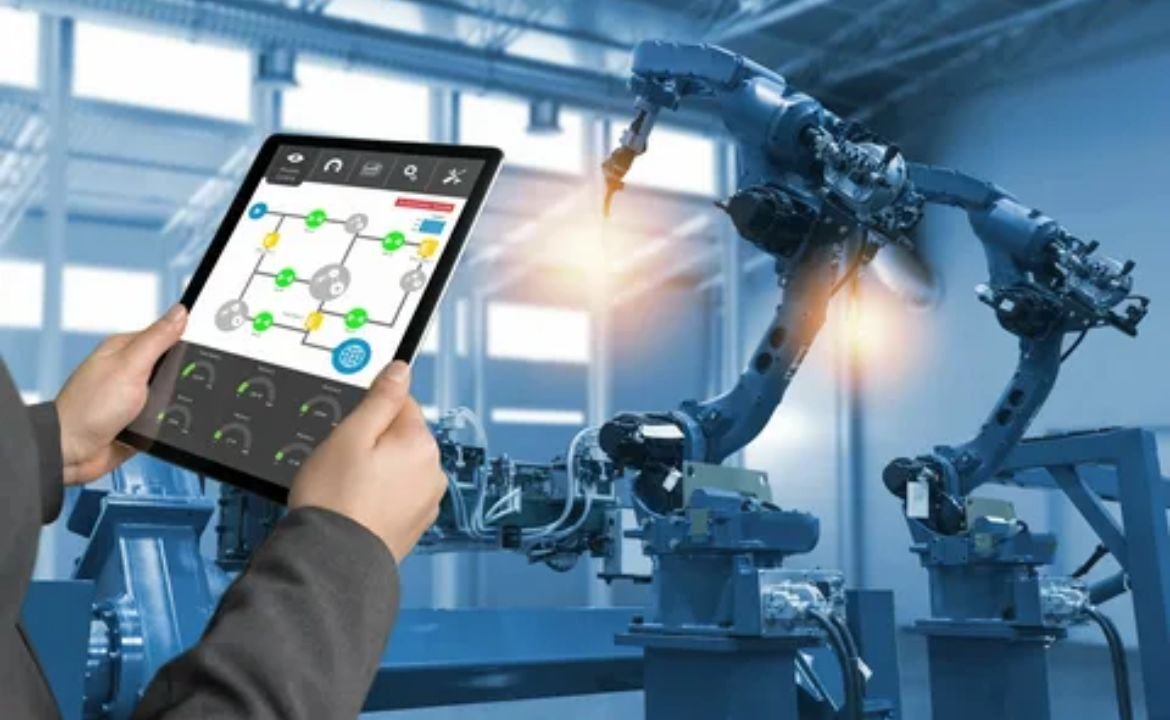
The software industry is undergoing a seismic shift. AI, machine learning, and advanced frameworks now converge to power intelligent automation. Moreover, developers and tech leaders are rallying around a bold new concept: tech trends GFXProjectality. This paradigm goes far beyond a buzzword. Indeed, it forces organizations to rethink how they design, ship, and scale software. Furthermore, staying competitive today demands that teams understand these trends deeply. Simply put, this knowledge is no longer optional; it is critical.
What Is GFXProjectality in Software Automation?
First, let us define what tech trends GFXProjectality actually means. GFXProjectality integrates graphics first, project centric workflows directly into automation pipelines. In other words, it bridges visual design systems, code generation, and end-to-end delivery into one cohesive methodology. Additionally, it draws from DevOps, UI/UX automation, and intelligent code scaffolding. To see a practical implementation, visit our article on Software DowsStrike2045 Python, where we apply these concepts in real-world scenarios.
In practice, software teams now treat visual project structures as the single source of truth. Rather than writing boilerplate code by hand, engineers define logic through graphical interfaces. Those interfaces then generate backend code, APIs, and deployment configs automatically. As a result, teams cut human error and reach the market faster.
The Rise of AI Driven Code Generation
One of the strongest drivers behind tech trends GFXProjectality is AI driven code generation. Tools like GitHub Copilot and Amazon CodeWhisperer help developers write code faster than ever. Furthermore, these platforms use large language models to predict, suggest, and author complex software modules. Consequently, teams ship features in days rather than weeks.
The business impact is profound. Junior developers now match the output of senior engineers. Meanwhile, senior engineers focus on architecture instead of repetitive tasks. Moreover, when teams layer AI generation into a GFXProjectality framework, a self reinforcing loop emerges. Visual blueprints feed the AI. The AI writes production ready code. That code then updates the visual graph automatically.
Low Code and No Code Platforms Democratizing Development
Another key dimension of the GFXProjectality movement is the rise of low code and no code platforms. Companies like OutSystems, Mendix, Appian, and Microsoft Power Platform now lead this space. Notably, they built billion dollar businesses by opening software development beyond technical specialists. As a result, business analysts, marketers, and operations teams now build functional apps with minimal coding knowledge.
This trend matters because it directly aligns with GFXProjectality principles. Visual drag and drop interfaces and pre built component libraries exemplify graphic first thinking. Additionally, automated workflow engines remove manual configuration steps entirely. Furthermore, as these platforms mature, developers connect them to traditional engineering pipelines through APIs and microservices. Therefore, the line between low code tools and professional development continues to blur.
Intelligent Test Automation and Quality Assurance
Software automation extends well beyond development. It also transforms quality assurance and testing. Traditional QA processes are slow, costly, and prone to coverage gaps. However, modern frameworks like Selenium, Cypress, and Playwright now change that equation. Moreover, AI powered tools like Testim and Mabl push testing intelligence even further.
Within tech trends GFXProjectality, intelligent test automation becomes a natural extension of the visual framework. For example, teams can auto generate test cases from defined user flows and component hierarchies. Additionally, when developers update a visual blueprint, the test suite evolves alongside it. Consequently, teams eliminate the long standing lag between development and QA cycles.
DevOps CI/CD and the Automation Pipeline of Tomorrow
CI/CD pipelines now form the backbone of modern software delivery. Tools like Jenkins, GitLab CI, CircleCI, and GitHub Actions let teams build, test, and deploy on every commit. Furthermore, this automation reduces overhead and keeps software in a deployable state at all times.
However, the next evolution goes further. Analysts who track tech trends GFXProjectality predict that visual project graphs will plug directly into pipeline orchestration layers. Instead of hand writing YAML configs, teams will use their graphical project structure as a live source of truth. Therefore, when the graph changes, the pipeline responds instantly. Only the affected modules rebuild and redeploy saving time and compute resources.
Cloud Native Architecture and Microservices
Cloud native architectures and microservices also reshape the automation landscape. Docker and Kubernetes let teams build apps as small, independently deployable services. Consequently, each service deploys, scales, and updates on its own. This design aligns naturally with automation principles.
In a GFXProjectality enabled environment, teams map microservices as nodes in a visual graph. Dependencies and data flows appear at a glance. As a result, automation tools traverse the graph to optimize communication and predict failure points. Furthermore, the system recommends infrastructure scaling decisions proactively. Ultimately, the cloud environment becomes not just automated but genuinely intelligent.
Looking Ahead The Future Is Visual, Automated, and Intelligent
AI, low code platforms, intelligent testing, cloud native design, and CI/CD automation are converging fast. Together, they push software systems toward near autonomous operation. Moreover, tech trends GFXProjectality sits at the intersection of all these forces. It offers a unified framework that lets organizations harness modern automation at full power.
For software leaders and technology strategists, the direction is clear. Embrace visual first, automation driven methodologies now. Organizations that act today will lead the digital economy tomorrow. In short, the future of software automation is not a distant goal teams are building it right now, one intelligent pipeline at a time.







Leave a Reply